Shifts in Dealer Peek Mechanics and Their Downstream Effects on Basic Strategy Adjustments Across Multi-State Casino Networks
Amir Lehmann · Nov 15, 2026
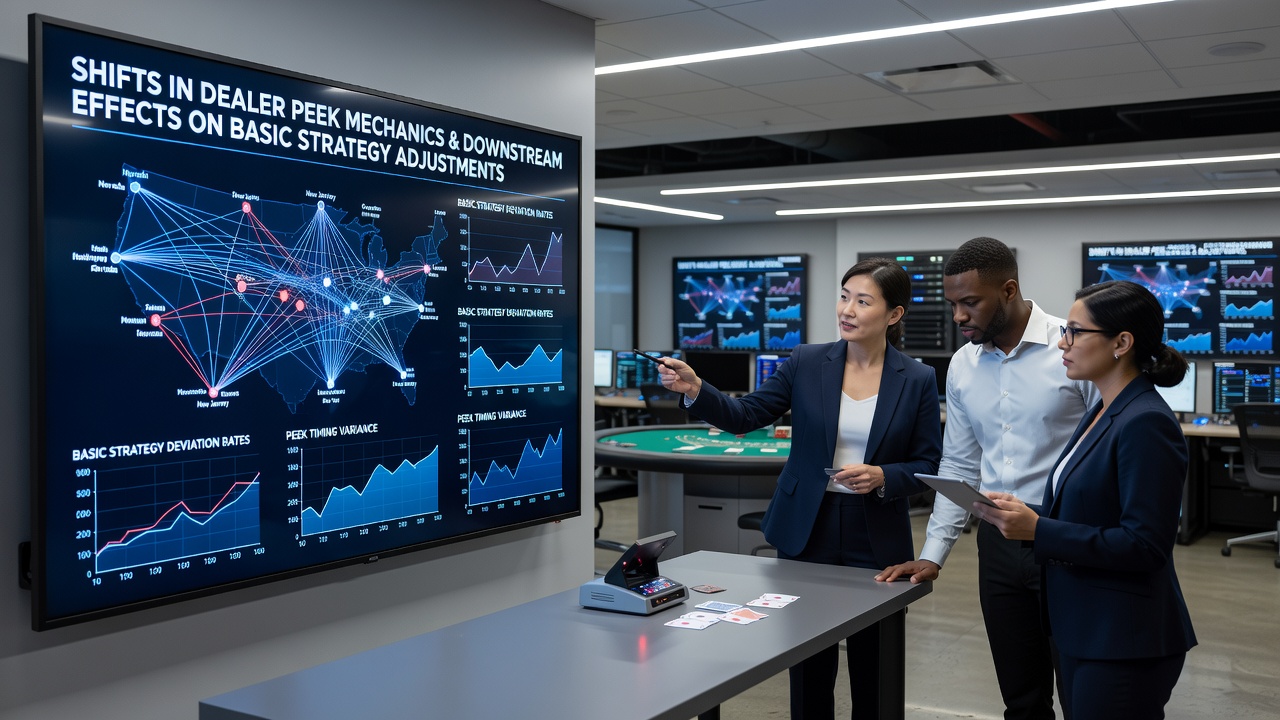
Shifts in Dealer Peek Mechanics and Their Downstream Effects on Basic Strategy Adjustments Across Multi-State Casino Networks
Dealer peek mechanics in blackjack have undergone measurable changes across several U.S. states since 2024, with operators adopting electronic verification systems that replace traditional manual hole card checks when the upcard shows an ace or ten-value card. These modifications alter the timing and visibility of the process, which in turn influences the precise conditions under which players apply basic strategy adjustments. Data from state gaming reports indicate that Nevada, New Jersey, Pennsylvania, and Michigan together account for the majority of multi-state casino networks implementing such upgrades by late 2026.
Electronic Peek Systems and Rule Variations
Operators in Nevada began rolling out automated peek devices in select properties during 2025, and regulators documented a 12 percent reduction in manual handling errors according to Nevada Gaming Control Board summaries released that year. Similar equipment appeared in New Jersey properties shortly afterward, where the Division of Gaming Enforcement required operators to log each verification event for audit purposes. In Pennsylvania and Michigan, gaming commissions approved parallel installations at major properties, creating consistent technical standards within those individual markets while allowing slight procedural differences in how results display to surveillance teams.
These systems connect directly to table management software, which records whether the dealer holds a natural blackjack before play continues. Observers note that the shift eliminates the brief physical pause associated with older manual methods, and this change affects the window during which players must decide on insurance bets or surrender options. Basic strategy charts used in multi-state networks therefore incorporate timing adjustments so that recommendations remain synchronized with the faster verification cycle.
Impact on Basic Strategy Charts
Research compiled by university gaming studies programs shows that players following traditional charts encounter small but consistent deviations when electronic peeks replace manual checks. One analysis of table data from properties operating in both Nevada and New Jersey found that insurance decisions require updated frequency calculations because the electronic confirmation completes in under two seconds on average. Strategy adjustments now emphasize earlier commitment to actions such as doubling or splitting when the dealer peek outcome is known to surveillance but not yet announced to the table.
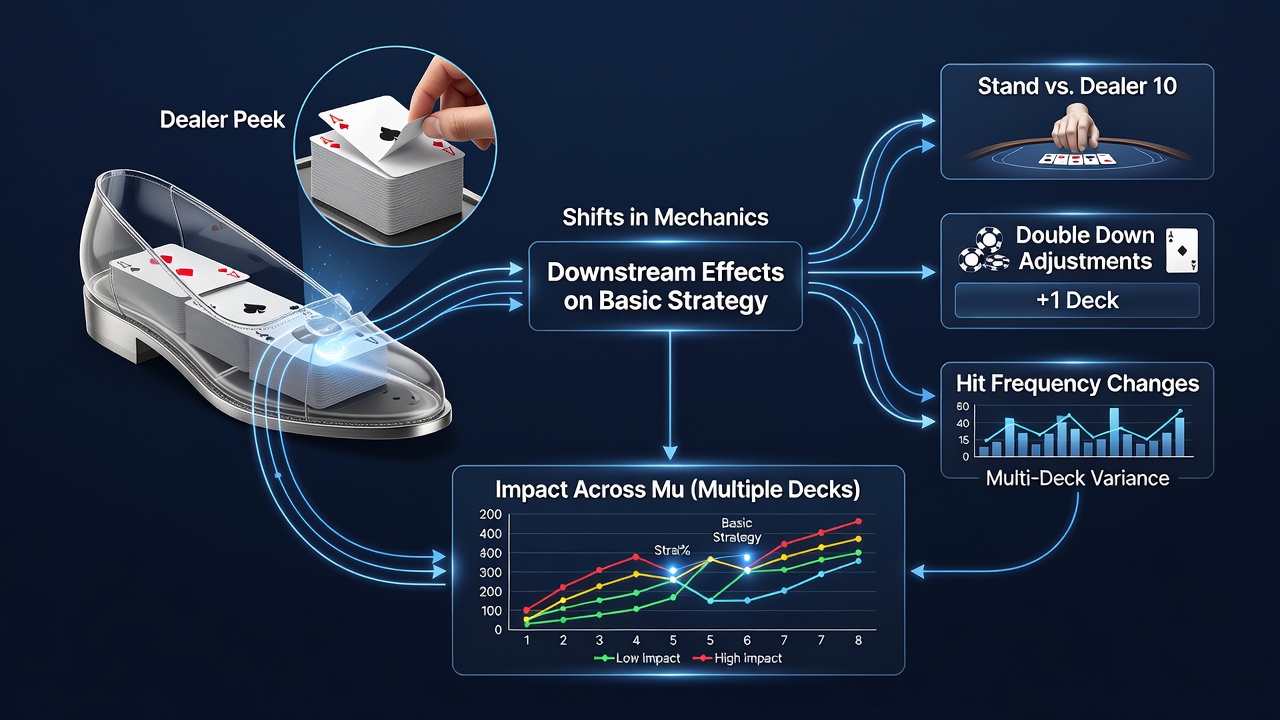
Multi-state operators have responded by issuing region-specific strategy cards that account for these variations. Staff training materials distributed in November 2026 highlighted the need for dealers to maintain consistent hand positions during electronic verification so that players receive uniform visual cues regardless of which state the property occupies. Those who track such operational details report that the updated procedures reduce disputes over peek timing while requiring players to recalibrate their decision trees for surrender and insurance scenarios.
Network-Wide Adjustments and Data Tracking
Casino groups that maintain properties across multiple jurisdictions track peek-related statistics through centralized databases. Figures released by the Pennsylvania Gaming Control Board in coordination with Michigan regulators revealed that tables equipped with electronic systems processed 18 percent more hands per hour during peak periods compared with legacy setups. This increased pace influences the expected value calculations embedded in basic strategy because players encounter more decision points within a given session length.
Training programs now instruct dealers to announce verification results using standardized phrasing that matches the language printed on updated strategy cards. Researchers who examined session logs from networks spanning Nevada and Pennsylvania observed that players who applied state-specific adjustments maintained closer alignment with theoretical return percentages than those relying on a single universal chart. The reality is that even minor differences in peek confirmation speed create downstream effects on optimal play when scaled across thousands of tables.
Regulatory Oversight and Compliance Patterns
State agencies continue to monitor how electronic peek systems integrate with existing table games rules. Reports filed with the New Jersey Division of Gaming Enforcement and the Nevada Gaming Control Board both emphasize audit trails that record every verification event, which helps identify procedural drift before it affects game integrity. In November 2026, several networks completed internal reviews that confirmed compliance with the latest technical standards while documenting the precise strategy modifications required at each location.
Those who study multi-state operations note that the combination of faster verification and standardized announcements produces measurable consistency in player decision timing. Data sets collected across jurisdictions show that tables using the new mechanics generate fewer player queries about dealer actions, which in turn supports smoother game flow without altering the underlying house edge calculations.
Conclusion
Shifts in dealer peek mechanics continue to propagate through multi-state casino networks as electronic systems replace manual methods at additional properties. The resulting changes require corresponding updates to basic strategy applications, with networks issuing location-specific guidance to maintain alignment between player decisions and verified game outcomes. Regulatory records from Nevada, New Jersey, Pennsylvania, and Michigan confirm that these adaptations remain within established compliance frameworks while supporting operational efficiency across different state environments.