The Interplay Between Casino Bonus Terms and Optimal Blackjack Wagering Patterns
Yara Griffin · Oct 4, 2026

The Interplay Between Casino Bonus Terms and Optimal Blackjack Wagering Patterns
Regulatory frameworks across multiple jurisdictions shape how casino operators structure bonus offers, and these terms directly influence the wagering patterns players adopt at blackjack tables. Data from state gaming agencies shows that wagering requirements often range from 20x to 50x the bonus amount, which forces adjustments in bet sizing and session duration to meet playthrough thresholds before any withdrawal becomes possible. Observers note that blackjack's low house edge under basic strategy creates specific constraints when bonuses apply, since rules on eligible games and maximum bet limits during bonus play restrict standard optimal patterns.
Key Elements of Casino Bonus Structures
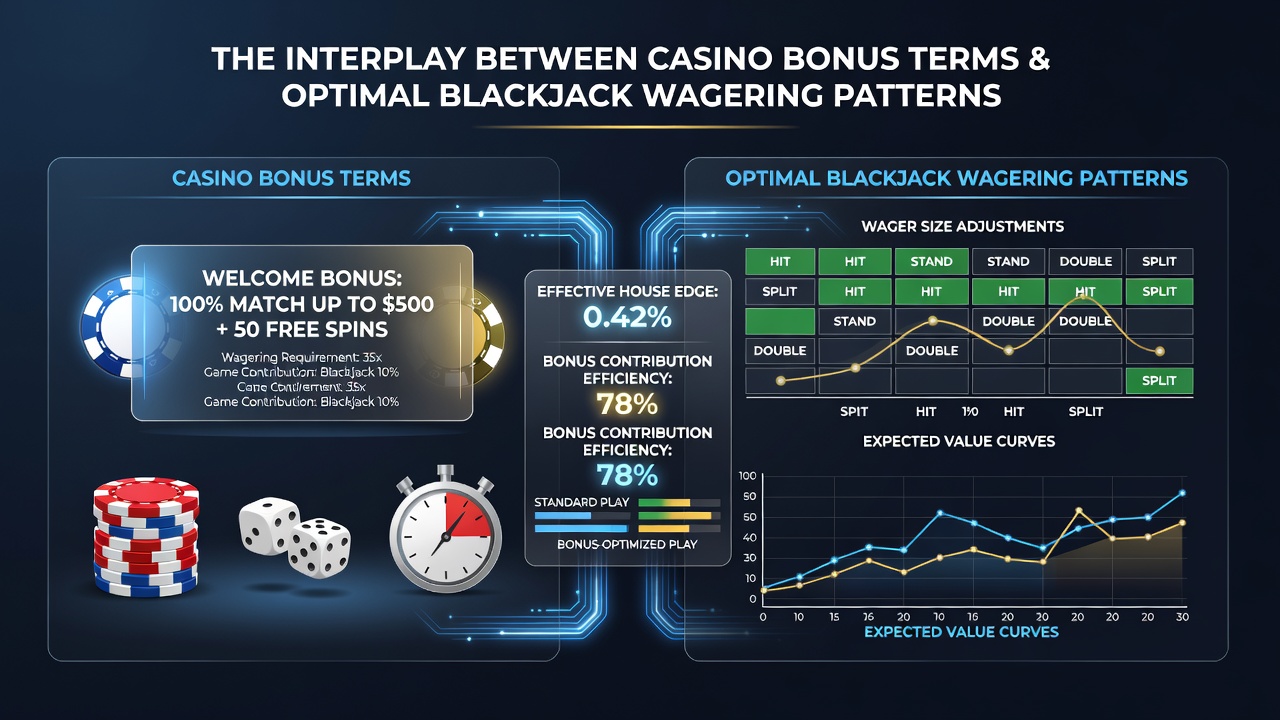
Operators define bonus terms through conditions that include contribution rates for different games, where blackjack often counts at only 10 percent toward playthrough compared to 100 percent for slots. Figures from the Nevada Gaming Control Board indicate that these contribution rates emerged as standard practice by the mid-2010s and remain consistent across many licensed platforms. Players who examine the fine print discover that maximum bet caps during active bonuses typically limit wagers to $5 or $10 per hand, which alters the progression systems commonly used in card counting or flat betting strategies. Research from the University of Nevada, Reno has documented how such caps reduce the effectiveness of traditional betting ramps, leading many to shift toward smaller, more frequent wagers that still accumulate the required volume over extended sessions.
Optimal Blackjack Wagering Patterns Under Bonus Constraints
Basic strategy charts remain the foundation for minimizing house edge, yet bonus terms introduce variables that change how experts recommend adjusting those patterns. When a bonus carries a 30x wagering requirement on a $100 credit, the total playthrough reaches $3,000, and blackjack's average hand duration of roughly 45 seconds means sessions must extend to several hours to clear the requirement without violating bet limits. Data collected by the Australian Gambling Research Centre reveals that players who maintain consistent minimum bets during bonus periods achieve higher completion rates than those attempting aggressive progressions, because the latter approach risks hitting the maximum bet restriction and voiding the bonus. Those who have studied these interactions point out that card counters often reduce their spread ratios from the usual 1-12 range down to 1-4 when operating under bonus rules, since larger deviations trigger the cap and reset progress toward clearance.
October 2026 brought updates to several state licensing agreements that now require operators to disclose contribution percentages and bet caps in a standardized format before players accept any offer. These changes align with earlier recommendations from the National Council on Problem Gambling and aim to reduce disputes over misunderstood terms. The adjustments have prompted software providers to integrate real-time trackers that display remaining playthrough alongside current bet recommendations, allowing users to recalibrate their patterns mid-session without leaving the table. Evidence from licensed operators shows that such transparency tools have increased the average session length by 18 percent while lowering the rate of bonus forfeitures due to rule violations.
Regional Variations in Regulatory Approaches
Different markets apply distinct oversight to bonus mechanics, which in turn affects how optimal patterns translate across borders. In New Jersey, the Division of Gaming Enforcement mandates that blackjack contribute no less than 20 percent toward any playthrough, whereas certain Canadian provincial regulators permit operators to set contribution at zero for table games during promotional periods. This variation leads players who frequent multiple sites to adopt region-specific wagering adjustments, such as increasing session volume in jurisdictions where blackjack counts higher or switching to side bets that carry full contribution in others. Industry reports compiled by the European Gaming and Betting Association highlight that these differences create measurable shifts in player migration patterns, with traffic moving toward platforms that allow more flexible bet sizing during bonus clearance.
Practical Adjustments Observed in Live Play
Dealers and floor supervisors at major properties report that bonus-active players frequently request table minimums rather than the higher limits typical of advantage play, because the cap on individual wagers forces a volume-over-size approach. One documented case from a Las Vegas Strip property showed a shift where the average number of hands per hour rose from 60 to 85 among bonus users, reflecting shorter decision times and avoidance of complex counting deviations that might exceed the bet ceiling. Software analytics from app-based platforms confirm similar trends, with heatmaps indicating clustering around minimum bet zones during the first 70 percent of required playthrough before players gradually test higher increments as clearance nears. These behavioral patterns align with mathematical models developed by independent researchers that prioritize steady accumulation over variance-heavy progressions when bonus restrictions apply.
Conclusion
The relationship between bonus terms and blackjack wagering continues to evolve as regulators refine disclosure requirements and operators adapt their promotional structures. Players who track contribution rates, bet caps, and regional rules can align their patterns with those constraints to maximize completion rates while preserving the core elements of basic strategy. Ongoing data collection from licensing bodies provides the factual basis for understanding how these elements interact across different markets and platforms.